When Knowing Your Strengths Is Only Half the Story
When Knowing Your Strengths Is Only Half the Story
We often focus on what we do well — and rightly so. But leadership — and the system around it — shows up in how we behave when things go wrong, when pressure ramps up, when things don’t go to plan. Hogan is one of the most validated, robust tools we use when the work calls for that full‑spectrum insight: strengths, values, AND derailers.
Why We Use It
We introduce Hogan when the leader or team is serious about clarity — not just “What am I good at?”, but “What risks am I carrying into the next level?” Because what you see may not be the only thing that matters.
With Hogan, we can explore:
What drives you — your motives, preferences, core values.
How you behave when things are going well — your “bright‑side” personality.
How you behave when under stress, fatigued, or stretched — your “dark‑side” tendencies that may derail you (and by extension your team).
How all of that aligns (or misaligns) with your role, your system, and your next chapter. Because assessments aren’t about labels — they’re about leverage.
What It Measures
The Hogan suite is built on decades of research, wide‑normed, and used globally. Here’s a breakdown of the major pieces:
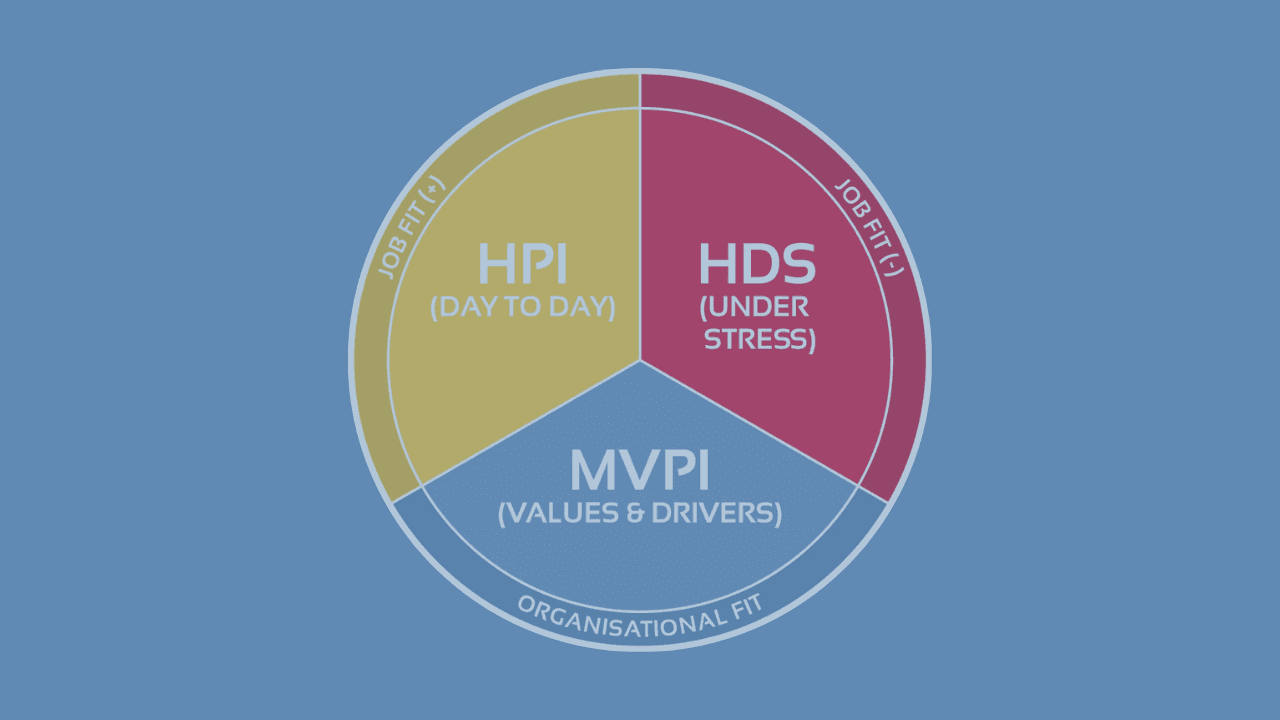
Hogan Personality Inventory (HPI): What you bring in normal conditions — how you relate, perform, show up.
Hogan Development Survey (HDS): What comes out when you’re under pressure — hidden risks and derailers.
Motives, Values, Preferences Inventory (MVPI): What really drives you — what kind of work, environment, culture energizes (or drains) you.
The holistic idea: It’s not just what you think you’re doing. It’s what you’re unintentionally doing, and how others experience it.
How We Use It Together
If we choose Hogan as part of your development journey, here’s how we structure the work — so it’s more than a “report download” and becomes real developmental leverage:
Intent & Alignment: We start by clarifying why we’re doing this assessment now. What’s shifting in your role, team, or system that gives this work urgency and relevance.
Assessment Completion: You (and sometimes your selected stakeholders) complete the relevant Hogan components.
Debriefing Conversationally: We walk through the results together. Not just “Here’s what the numbers say,” but “Here’s what these patterns suggest for your next chapter.”
Translational Application: We turn insight into design. What practices, conversations, focus areas does this open for your growth?
Integration & Momentum: We embed the findings into ongoing coaching, team dialogues, leadership development. Because the value is in what you do with the insight.
When It Makes Sense
We might consider Hogan when you’re facing any of these:
A transition: new role, bigger scale, different system.
A leadership or team development moment: it’s less about “get better” and more about “get smarter — about patterns, risks, alignment”.
You sense something is misaligned: your values, your style, your impact. The data doesn’t feel fully captured in feedback alone.
You’re working at the intersection of individual capability and systemic leadership dynamics — and you want tools that speak to both.
If you’re willing to look at both your brightest strengths and your blindest spots, Hogan assessments offers a mirror worth standing in front of.